Vet Scientific Evidence Relevant to BHOC and Oxygen Therapeutics.
Veterinary publications can clarify transfusion practice, oxygen delivery, storage, compatibility and species-specific physiology. They provide scientific context for BHOC development, not product-specific efficacy or safety evidence.
Understanding oxygen delivery
A quick route from biological chemistry to functional oxygen delivery.
From hemoglobin chemistry to effective oxygen delivery.
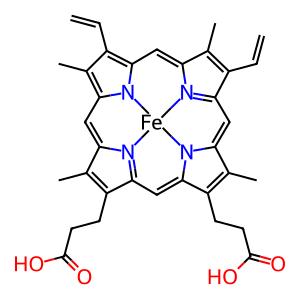
Hemoglobin binds oxygen through iron-containing heme groups. Oxygen delivery also depends on circulation, oxygen affinity, blood flow and tissue demand.
Hemoglobin-based oxygen carriers, or HBOCs, investigate a cell-free approach to oxygen transport. BHOC builds on this field as a Biological Hemoglobin Oxygen Carrier development platform. The objective is complementary oxygen-delivery support, not replacement of the wider functions of blood.
Nature's bioengineering
Most vertebrates use hemoglobin, with important exceptions such as Antarctic icefish. Conserved chemistry is a scientific starting point; species-specific physiology, dosing, safety and efficacy still require their own evidence.
Heme and chlorophyll
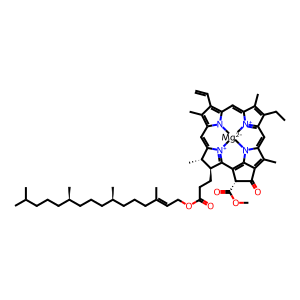
Both belong to related tetrapyrrole chemistry. Heme coordinates iron; chlorophyll coordinates magnesium. Their ring structures, side chains and biological roles differ. Hemoglobin transports oxygen; chlorophyll absorbs light in photosynthesis.
Functional oxygen delivery
PCV is important. Functional oxygen delivery requires more.
Packed cell volume (PCV) measures the fraction of blood occupied by red cells. Cell-free plasma hemoglobin can add oxygen-carrying capacity without increasing red-cell volume, so PCV alone does not describe the whole oxygen-delivery system after an HBOC infusion.
Total hemoglobin, circulation, oxygen affinity and unloading, blood flow, tissue demand and clinical physiology all matter. P50 and the full oxygen dissociation curve also change with pH, carbon dioxide, temperature and the cell-free environment.
Measure the right compartment
PCV describes red-cell volume; it does not count plasma hemoglobin as red cells.
Historical canine observations generate research questions; safety and tissue benefit require controlled product-specific evidence.
This interpretation comes from historical canine Oxyglobin material and general oxygen physiology. It is not a claim of BHOC efficacy or a reason to disregard PCV.
Veterinary Transfusion, Blood Systems & Oxygen Delivery
Veterinary Transfusion, Blood Systems & Oxygen Delivery
Peer-reviewed veterinary publications relevant to transfusion, oxygen delivery, storage, compatibility and species-specific physiology. These sources provide scientific context for BHOC development; they are not evidence of BHOC efficacy or safety.
Oxygen transport: comparative studies and animal models
Research comparing red blood cells and extracellular hemoglobin carriers by actual oxygen transport, rather than hemoglobin concentration alone. Animal experiments and computational models provide scientific context; they do not establish BHOC efficacy or clinical veterinary approval.
Documented cases and source-linked veterinary evidence.
The central evidence library contains documented cases, historical Oxyglobin records, regulatory materials and species-linked publications. It is separate from general scientific context and from BHOC development hypotheses.
BHOC VET-platform: Scientific Context & Research Questions.
BHOC VET-platform is the interpretation and research-questions layer. The central Evidence Library holds source-linked records, documented cases and regulatory materials.
Veterinary sepsis, metabolism and cellular oxygen use
Sepsis, inflammatory disease and metabolic dysfunction raise questions about oxygen transport at several levels. A human critical-illness review can provide physiological context, while a veterinary study still needs a defined species, model and endpoint.
For canine, feline or equine research, perfusion, oxygen extraction and cellular response should remain distinguishable. The reviewed materials do not establish a veterinary BHOC sepsis treatment or mitochondrial-restoration effect. A proposal can begin with a measurable question and the species-specific evidence needed to test it.
Equine research should distinguish oxygenation, cardiac output, respiratory gas exchange and tissue oxygen delivery. Hubbell and Muir’s review addresses the relationship among these measurements in anesthesia.
The historical catalogue includes Swanson and Muir’s study of dobutamine-induced cardiac-output augmentation in anesthetized healthy horses, and Soma and colleagues’ pharmacokinetic study of hemoglobin glutamer-200 bovine in horses. Their models and endpoints remain distinct.
The donor-welfare concept includes camels within its cross-species discussion of donor access and compatibility. That is a starting point for a species-specific question, not evidence of BHOC benefit during camel surgery.
A proposed camel study should identify the species, clinical or experimental setting, donor-blood constraint and intended oxygen-delivery measurement. Formulation, dosing, safety and efficacy require their own evidence. Current sources labelled pending review remain separate from established product findings.